
Category: Special Topics

  • Coding While Impaired – A Reason For Project Failure Rates

    Coding While Impaired – A Reason For Project Failure Rates

    Every so often you will come across a comparison of drunk driving to trying the same action while sleep deprived.  This usually is surprising to spectators when the lack of sleep is shown to be as bad as consuming a lot of alcohol.  Although developers tend to be comfortable drinking and drinking alcohol, they are far more known for long hours and lack of sleep.  Maybe this correlation can also be extended to the larger than average project failure rates.

    The Caffeine Culture

    I have met very few developers over the years that are not proud of their caffeine consumption.  It is a badge of honor to walk into a late night session with six packs of energy drinks.  This becomes their standard approach to the long hours regularly required of those that chose to code as a career.  The problem is that the long hours are inflicted as much as they are elected.  I have experienced a countless number of projects where the approach to hitting target dates is to cancel time off and extend hours to seventy or more per week.

    The typical attitude is to grab some energy drinks and pour more hours into a project to get it on track.  I have no problem with this approach.  However, I do question those that are surprised by lower quality after these pushes.  You can design and test all you want.  However, a team that is comprised primarily of sleep-deprived members is roughly the equivalent of those same people after an evening of adult beverages.

    Mental Work

    When you consider how much more mental coding is (as compared to driving) the problems become apparent.  You have people that are not at their best mentally doing tasks that require concentration and complex thinking.  Once I started down this road, it seemed evident that these projects would have high amounts of errors and thus failure rates.  The worst part of all this is that those increased errors cause more time to be needed to get tasks done.  That leads to less rest and sleep, which leads to more errors.  Thus, a death march is born.

    The amusing thing is that many companies have policies that go as far as terminating those that show up for work inebriated.  Yet, they have no problem demanding the long hours that can lead to the same mental state.

    A Different Path

    There are some instances where the long hours come from poor planning or management.  Unfortunately, many of the situations arise from heavy competition, low budgets, and the related tight deadlines.  You may argue that means that team leaders are left with no choice.  I would say otherwise.

    When you look at productivity curves for the average human, you see a drop off as the day gets “too long.” Studies show the length of a comfortable (and productive) workday varies from worker to worker.  Nevertheless, we can work with averages and observation.

    I recommend that adding hours and pushing for longer work weeks be done in an incremental way.  Ease your way into it earlier in a project if it looks like it will be needed.  You can then closely observe the developers and bug rates to see how things deteriorate.  At some point, there will be a diminishing return that makes long hours not only useless but detrimental.  Once you have that hard limit, you are better served to add resources or accepting slipped dates.

    Developers may like to be “edgy” by embracing sleep loss and long hours.  However, this is not a productive approach to software.  Maybe treating them as imperfect humans will help improve project failure rates.
     

  • Finding A Good Scrum Master

    Finding A Good Scrum Master

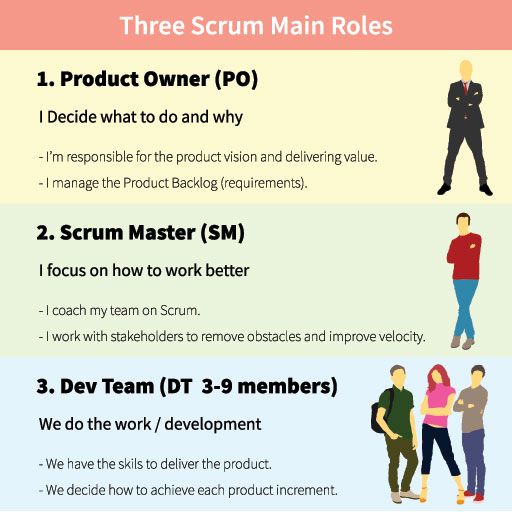
    It is hard to believe many readers have not heard of the Agile approach to development.  This methodology is a hot approach, and all of the players are in demand.  Of these roles, the most in-demand appears to be the scrum master.  The challenge in filling this role is often figuring out what sort of skills are best for it.  Is it a technical role? A manager? An analyst?  Let’s look at what the responsibilities are and then the skills a good scrum master should have.

    Responsibilities of a Scrum Master

    When you break down the role, it becomes easier to find matching skills.  Therefore, we will start with the typical duties of a scrum master.  Note that these are not universal, but part of the variance in requirements comes from a lack of understanding of the role.

    • Act as a liaison between the developers and business owners
    • Push the development team to be productive (velocity)
    • Help avoid pitfalls and design flaws (technical and architecture leadership)
    • Balance current work and demands with technical needs and ability to deliver (project management)
    • Provide a steady stream of updates for users to assess and see as progress

    There are other facets of the scrum master role.  However, these are the high-level tasks of one that will be highly successful.

    A Mixed Breed

    Note that some requirements are technical, some you would find with a Business Analyst (BA), and some management.  This is not a common combination.  You cannot just pull out a developer or assign a BA or assign the role to a manager.  The scrum master needs to be able to wear each of these hats without being too heavy-handed while wearing those hats.

    For example, a strong scrum master will drive the team to make aggressive but reasonable choices for the tasks in a sprint.  However, they will ensure the team has buy-in for those choices as well.  Ideally, they lead without being seen as a leader, more as a facilitator.  This role can help with design and architecture discussions but should not be the one that dictates solutions or approaches.  They need to be technically skilled enough to understand the details of what is being implemented and communicate concerns to business owners or technical architects.  Are you worried yet?

    Seasoned Veterans

    The best scrum masters I have worked with are not new to the SDLC.  They have worked on good and bad projects in the past.  There is also a broad range of team sizes they have worked with.  Typically, the experience as a developer is at least five years with some experience as a lead and architect as well.  They also need to have experience in gathering requirements and working with BAs.  In general, they should be a well-rounded developer or technical BA that is ready to step away from a role that involves mostly coding on a daily basis.

    This last point may be the hardest hurdle to overcome.  Developers that have progressed to the desired level for a scrum master are often going to be ready to move into a technical leadership or architect role.  The technical BAs are positioned for management or product owner roles.  This leaves you with people that may be perfect for the part, but they are not interested in it.  It may be seen as a step-down.  In reality, the salary expectations may be an actual step-down.

    A Narrow Window

    Now that we have looked at what sort of skill set works best we can start to describe the kind of person that will work best.  This also can help you set salary expectations for the role.  First, some scrum master positions do not require a full-time focus on those responsibilities.  I have found that you can often run a team in around twenty hours a week, maybe a little less.  That makes a scrum master a part-time position.  Therefore, you can add responsibilities to “sweeten” the post for more senior staff.  You can also work in tasks for the scrum master that allows them to continue to advance their career.

    Even with these options, your best scrum master is going to be one with six to ten years of experience in development teams and multiple roles.  That puts your salary band in the neighborhood of an upper mid to lower senior level developer.  I often find this to be close to project manager salaries.  If you go lower, then you will struggle to find someone with the technical and leadership chops to handle the position.  If you shoot too high, then you will be wasting an expensive skill set on the scrum master role or put someone in that position that is too intimidating to allow the team to make their own decisions.  Do not shy away from adding in additional work for the candidate that will enable them to “earn” a higher salary or sweetens the position with work they want to pursue.

    In the end, a scrum master is a difficult position to fill but not impossible.  Do not be confused by the title or “agile” label.  Stick to the job requirements and you will be able to find a good fit without searching for a purple unicorn.

  • Use Research Time To Improve Your Team

    Use Research Time To Improve Your Team

    The schedule of every IT team I have worked with is full.  There is always a steady stream of tasks to be done and technical debt to address.  This makes it easy for a manager or team lead to keep the whole team working at 100% (or more) day in and day out.  The problem with this full steam ahead approach is that it does not provide time for research of new technologies and skill development.

    Popular Example

    Google made news many years ago when they scheduled a day a week for employees to research and develop skills.  Their instincts were tapped to the tune of 20% of their time.  This is not a small investment in employees and the company itself.  As it turns out, Google has been a pretty successful company.  You can see all sorts of products that have come out of that investment in their employees.  Just take a little time and browse the Google labs projects.  Many of these came out of that time allotted for research.

    This example is a good one for us to consider in scheduling projects and workloads.  Google is known for their innovation and skilled workers.  Some of this success comes from the employees that have been hired, but some of the credit goes to management.  This success did not come overnight but what if your organization is considered world-class a few years from now?

    Running The Numbers

    I am not sure a 20% investment of time is going to pass most companies.  However, what is the cost of 10% of their time?  Specifically, consider the typical IT worker does not work forty hours per week.  Fifty or more is common.  That is a 25% increase in “typical” work week hours.  Therefore, you can look at the hours worked Monday through Thursday, and that often meets the typical forty-hour workweek.  Providing a “research on Fridays” benefit would effectively be doing so with “free” hours.

    The cost of blocking out half the day on Friday for research or personal projects would be easy to absorb by any organization.  It used to be built into a lot of consulting companies.  They had a little thing called “bench time” that was non-billable work while waiting on a contract.  That has disappeared from many companies as they try to improve margins and reduce costs.  However, that has a price.  I worked at a company that used their bench time to create commercial software products.  They could have turned those consultants loose as soon as the billable jobs ended.  Instead, they turned them into resources to create another revenue stream.

    Making It Work

    A program like this is not to be taken lightly.  There is plenty of room for abuse and missing the point.  I have found that a few ground rules and some structure will go a long way.  The first step is to build in some accountability.  This has a danger of becoming micromanaged, but it is too valuable to ignore.

    The level of accountability I am talking about is regular status and setting goals.  Since this is research work, then the goals can be flexible.  However, there must be something for the employees to aim for.  This can be a challenge for those that are not self-starters.  Help them lay out a plan for what they want to accomplish.  Just make sure that you push them to lead the discussion and work on something that appeals to them.

    When you have a team that is working for you and has a “bonus” each week of doing something to advance their career everyone wins.  The employees will get better while becoming more loyal to your organization.  There is a danger of employees growing to the point where they leave to start their own companies, but I would argue that as good publicity.  When you have an environment that fosters success, you will have a steady stream of people that want to fill those holes.